
Summary
- UNITAD, the United Nations Investigative Team to Promote Accountability for Crimes Committed by Daesh/ISIL, explored mass graves in Iraq between 2018 and 2024.
- Its mandate, supported by European governments, was cut short after relations with the Iraqi government soured, leaving many survivors and their loved ones without the hoped-for findings.
- This saga provides lessons for Europeans about how to back useful efforts towards justice and reconciliation in their war-ravaged neighborhood—including in post-regime Syria.
- Such stabilization efforts should work with local power, sensibilities, and civil society.
In search of the disappeared
Iraq is so strewn with mass graves—from the most recent Islamic State of Iraq and Syria (ISIS) ones to Saddam-era pits—that it has a specialized mass graves directorate. It even has a Mass Graves Day. The United Nations estimates that somewhere from a quarter of a million to a million people disappeared in Iraq during the last half century. More than half of the over 43,000 cases of missing Iraqis that the International Committee of the Red Cross (ICRC) has recorded since 2003 remain unresolved. Many of the missing are believed to be in mass graves. Every number is a person who was part of a family that is integral to a community, such are the enduring ripple effects of war.


Since the fall of Saddam Hussein’s regime in 2003, Iraq has spent years excavating elements of its painful history. Too often in the Middle East, such traumas are left buried and relegated to an unexamined past. That can be because they are too technically difficult or expensive to undertake; because of the intimidating continued influence of the alleged perpetrators or fears of social unrest; or because justice and accountability can seem like little more than distant imagined hopes. Families are left in limbo. Underlying grievances remain unaddressed, and hatreds and hurt are left to stew, ensuring future ruptures. But sometimes the past must be unearthed in order to bury it. There is great power, especially for the aggrieved, in saying: “This happened here, it has been proven.” Closure is a big part of healing. The truth can also dispel competing narratives and set the historical record straight.
Iraq’s efforts stand in stark contrast to some nearby war-ravaged states. In Lebanon, a blanket amnesty for civil war-era crimes and a sense of national amnesia left secret mass graves undisturbed, burying efforts to locate the more than 17,000 people still missing from the country’s 1975-1990 civil war.
Syria is embarking on its own reckoning after the abrupt collapse of Bashar al-Assad’s regime in December 2024. Of the many historic moments broadcast after the dictator’s fall, the images of people emerging dazed and disheveled from the state’s network of dungeons were among the most powerful. The liberation of the prisons allowed the families of tens of thousands of people disappeared over the decades to finally discover the fate of their loved ones. The lucky were reunited. Many more were not. The discovery of mass graves suggested what had likely become of them.
As Syria transitions into a new phase, contending with the horrors of its past will be an important element of how it moves forward—whether it adopts the Lebanese route, or learns and perhaps applies lessons from Iraq’s, or forges a different path altogether.
The Iraqi experience
Baghdad has two dedicated institutions tasked with exhuming and identifying remains: the ministry of health’s Medico-Legal Directorate (MLD) and the Mass Graves Protection and Missing Persons Directorate (MGMPD). The latter was previously known as the Mass Graves Affairs Directorate prior to a law passed in November 2024 that changed its name and widened the duties of its parent governmental organization, the Martyrs Foundation. In 2017, after Iraq declared victory against the militant group ISIS (also known as ISIL, the Islamic State, and Daesh), Baghdad requested UN support to collect evidence of crimes committed by the group in Iraq. In September 2017, Security Council Resolution 2379 established UNITAD, the UN’s Investigative Team to Promote Accountability for Crimes Committed by Daesh/ISIL.
The European-backed body was mandated to serve as an investigative team to “support domestic efforts to hold ISIL (Daesh) accountable by collecting, preserving, and storing evidence in Iraq of acts that may amount to war crimes, crimes against humanity and genocide committed by the terrorist group ISIL.” The European Union was one of UNITAD’s main donors, committing millions of euros toward the organisegroup’s effort to safeguard and organise evidence of ISIS crimes as part of what the EU called its “long-term commitment to justice and accountability.” Separately, European states including Germany, France and the Netherlands also provided further financial contributions to support UNITAD’s technical efforts to pursue accountability against ISIS.
UNITAD got to work in 2018. It was not meant to be a permanent body, but its mandate was truncated, ending in September 2024 after Baghdad declined to support its renewal. Iraq’s government cited frustration with what it said was UNITAD’s failure to cooperate and share information with national authorities. One factor behind this was that legal proceedings against alleged perpetrators in Iraq may result in the death penalty, to which the UN is formally opposed. In its 12th and final report to the Security Council, presented in May 2024, UNITAD had referred to evidence “which could not be delivered to the Iraqi authorities and would be kept as part of the United Nations archive.” UNITAD’s transferring of some of its evidence to third parties, including European governments, to aid in prosecuting ISIS fighters abroad had exacerbated Iraqi discontent.
Good intentions, dashed
UNITAD’s experience seems to be a cautionary tale of a foreign player with good intentions that upset some local stakeholders and became entangled in Iraqi divisions, traumas and tensions—as well as UN bureaucracy. There are wider lessons for Europe in that endeavor.
Using on-location reporting, additional interviews and UNITAD reports (full methodology below), this paper will explain the UN body’s mission, its engagement with Iraqi and other stakeholders, and how and why it ended. It will explore Baghdad’s plans for continued work on mass graves and the disappeared, both in former ISIS-held territory, and elsewhere. It will also consider what assistance Baghdad needs or wants from Europe and the international community, and just as importantly, what it does not want. And it will present lessons from Iraq’s experience for today’s Syria as it moves beyond the Assad regime and grapples with its own bloody recent past.
More broadly, this paper will consider what Iraq and its respective international backers need to do to help address longstanding grievances and issues of accountability. Without those, meaningful bids to stabilize the country and prevent future cycles of conflict will likely keep failing.
What, one might ask, is Europe’s stake in this? European foreign policies and interventions in Iraq (and Syria) over the years have had immediate as well as lingering consequences, both positive and negative, on the places and people they impacted. Mass graves and missing persons are part of that landscape and that legacy. There were no sectarian militias in Iraq, including Al-Qaeda, before the 2003 US-led invasion, in which several European states participated. And there would be no ISIS in Iraq without Al-Qaeda, its precursor in the country. Europe cannot wash its hands of traumas that its policies, in part, helped create.
The view from the ground
In 2006, Iraq formerly established the body known as the Mass Graves Affairs Directorate, now the MGMPD, three years after the US-led invasion. Prior to that, as in Syria, families had desperately and haphazardly searched for missing loved ones on their own. They had dug up sites of mass graves using shovels, hoes and their bare hands—and, in the process, mixed up and damaged remains and other crucial evidence. A more organized approach was necessary. Iraqi religious authorities issued a ruling prohibiting the random, unauthorized exhumations, while the political class worked to formulate a law and mechanisms to safeguard, protect and systematically investigate the sites.
To date, almost 290 mass graves have been exhumed across Iraq. The MGMPD has identified 96 sites believed to contain victims of Saddam’s regime and has opened 80 of them. Together, these contained 159 mass graves (a single site may include multiple mass graves). Militias including ISIS, the Iran-backed Popular Mobilization Units, and other armed actors operating post-2003 are believed to be responsible for another 122 sites, 51 of which have been exhumed and were found to contain 130 mass graves.[1]
Researchers typically discover the locations because of witness testimonies, including from survivors, police sources and informers, as well as suspects being interrogated; or by chance during construction work; or by the displaced after they return home. Specialized teams from the directorate also analyze satellite imagery of areas where atrocities are suspected to have occurred, looking for topographical changes that may warrant further investigation. It can take years to find and then many more years to excavate a location, before the long process of identifying the victims can begin. In January 2025, for instance, 155 remains were retrieved from a mass grave in Al-Muthanna, in southern Iraq, that dated back to Saddam’s Anfal Campaign against the Kurds in 1988. The grave was only discovered in 2018 and exhumed eight years later. New mass graves continue to be found.
Dheyaa Kareem Tuama, head of the MGMPD, has worked at the institution since its earliest days, as have most of its 50 or so employees. He explained that every year, eight sites are earmarked to be opened, two per quarter, although things do not always go to plan. “A site we assume has one grave might be found to contain many more,” he said. “We also can’t know how many remains are in a mass grave, or their condition and how much time it will take to extricate them until we start work.” In 2024, his teams opened 14 mass graves.
The selection of the sites is based on several factors, Tuama said, mainly informed by his partners in the MLD. One is whether the MLD has adequate storage space for the remains. Another is if investigators have compiled a database of testimonies from families of the missing suggesting a possible connection to a particular site, as well as whether it has obtained their blood and DNA samples for comparative purposes. The physical conditions also matter; mainly concerns about adverse weather conditions or animals compromising the crime scene. Investigators generally prioritize mass graves near population centers, in a bid to clear the area of remains and evidence, to enable people to return home. But most exhumations are in remote, inhospitable locations, including deserts, that can pose ongoing security risks or dangers from unexploded ordnance and unstable terrain.
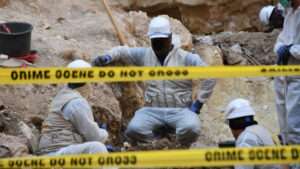
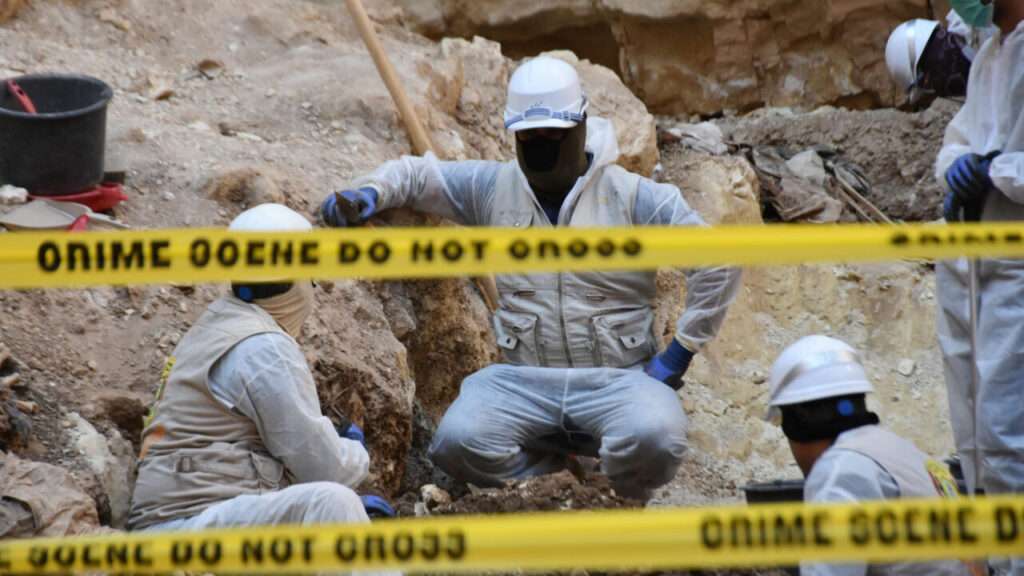
It is physically arduous, emotionally taxing work. The directorate’s field teams include a forensic photographer, criminal investigator, forensic anthropologist and pathologist. During an exhumation, over a dozen coordinates are recorded for every set of remains to note its exact position. Investigators also index personal items that might help with identification. Sometimes, Tuama said, remains are found with newspapers or books that can help date a site. Other finds are psychologically harder to process: “Newborns whose first teeth hadn’t even emerged,” he said, or “bodies fused together during decomposition or on top of each other, including women and children with their toys.”[2] Members of the MLD on-site during the exhumations are tasked with physically removing the remains and placing them and other evidence in body bags, which are then transported to the directorate’s headquarters in the Iraqi capital.
The MLD in Baghdad is the only laboratory in Iraq authorized to conduct DNA identification of remains exhumed from mass graves, although there is also the Ministry of Martyrs and Anfal Affairs in the Kurdistan Regional Government (KRG) and a criminal forensics department within Kurdistan’s interior ministry that has the capacity to process DNA identification of remains.
The directorate’s 120 staff are divided into three sections: an administrative department that, along with members of the MGMPD, meets with families of the missing to obtain testimonies and blood samples; an anthropological forensic medicine department that examines the remains, takes specimens for DNA testing and produces autopsy reports; and the DNA lab which analyses and tries to match specimens to identify the remains based on samples taken from families.
At the MLD’s anthropology laboratory in Baghdad, remains including clothing and other personal effects are washed, catalogued and closely examined for clues that may help indicate the cause of death and identity. “We see a lot of remains with bound hands and blindfolds,” said Dr. Yasameen Mundher Sedeeq, deputy head of the MLD.[3] The lab’s staff include dentists, biologists, and forensic pathologists who handle on average about eight sets of human remains a day. That number depends on the condition of the bones, including whether these are full skeletons, incomplete ones, or a jumble. Staff piece together partial or mixed-up skeletal remains preliminarily, until DNA analysis can confirm that the bones all belong to the same person.
After being tested, the remains are stored at the directorate for 60 days, during which time staff organise DNA results against a registry of blood and DNA samples taken from the families of the missing. If a match is not found during that period, the remains are buried at specialized sites, to be retrieved at some later date if and when the dead are identified and claimed. The two directorates also submit legal case files to the relevant Iraqi courts, which are tasked with identifying the perpetrators of the crimes. In 2024, six files were forwarded to the judiciary.
Since 2009, according to Sedeeq, the MLD has examined more than 12,500 remains, but only identified about 2,500 of them. More than 7,000 of those date back to the 1980-88 Iran-Iraq war, of which only about 150 have been identified. The deaths or migration of relatives, and the lack of a database of biological samples, reduce the likelihood of ever resolving those cases. “After forty or forty-five years, survivors (on both sides of the border) have died and others have stopped searching,” Sedeeq said. Most of the 2,500 remains the directorate has identified were in mass graves dating from 2014 onwards, she added.[4]
In its annual report for 2024, the MGMPD disclosed that it had retrieved 677 remains in 2024, and obtained testimonies and blood samples from 2,015 people whose loved ones were missing. It reported that a total of 168 remains had been identified from various mass graves around the country, some of which dated back to the 1980s and others to ISIS crimes.
Enter UNITAD
How a Europe-backed UN team made a difference
Some 18 months after its establishment under UN Security Council Resolution 2379, in spring 2019 UNITAD participated in its first exhumation. It took place in the Yazidi village of Kojo in Sinjar in northwestern Iraq (a district claimed by both Baghdad and the KRG). UNITAD provided technical and forensic assistance to teams from the MGMPD and MLD that were recovering remains from a site there. It also collected and investigated forensic, physical and biological evidence as part of its efforts to build criminal cases against ISIS. Kojo was one of more than 200 mass graves that the UN reported in parts of the country formerly controlled by ISIS.
Five years later, UNITAD’s final mission took place from May until August 2024 (a month before it concluded its mandate). The latter part of this report contains an account of this work at the Bir Alou Antar sinkhole near Tal Afar in Iraq’s north, believed to contain the remains of Yazidi and Shiite Turkmen victims. All told, UNITAD participated in 68 ISIS-related mass grave excavations, recovering more than 900 remains, several hundred of which were identified and returned to families.
Half of UNITAD’s staff were Iraqi nationals. Its six field-based and two investigative units worked closely with Iraqi authorities. The UN body’s annual budget of around $20m was gargantuan compared with the inconsistent and meagre state funding of its Iraqi partners in the two directorates.
It developed tailored tools and customised systems, including a centralized and searchable electronic evidence management system. It also created a platform, Zeteo, that filtered and analyzed images and videos “without significant human intervention” to streamline analysis and minimize the harm to researchers of watching evidence of atrocities. And it set up a forensic science laboratory in Baghdad which included “a decontamination room and rooms for evidence storage,” accessed biometrically to “further assure prosecutors and the courts that evidence was collected, analyzed and stored in ways consistent with international standards,” UNITAD said in a report.
UNITAD said that it helped build the capacity of Iraqi authorities. It donated about $2.4m worth of equipment and training, including specialized tools and forensic software related to the excavation of mass graves and the analysis of remains, as well as DNA sample-matching. It also established digital forensic laboratories at four Iraqi criminal courts, “including all-in-one digital forensic software designed to extract, decode, and analyze data” which “enabled the capacity of Iraqi experts trained by [UNITAD] to acquire, manage and verify digital evidence from a significant number of digital devices” seized by Iraqi authorities.
During its six years in Iraq, with EU funding, UNITAD was able to collect and preserve 52 terabytes of ISIS-related material obtained from laptops, hard drives, mobile and satellite phones, and paper records held by Iraqi authorities, as well as open-source ISIS statements. It funneled the data into a central archive and transferred it to UN headquarters, “most of” which was shared with Iraqi authorities, it noted. In its final report to the Security Council, UNITAD said the archive in Iraq was “for use in domestic criminal proceedings and achieving accountability at the national level.”
Significantly, UNITAD also obtained evidence from witness interviews. Some submissions came via a trilingual English, Arabic and Kurdish web-based mobile application it developed called SHUHUD, Arabic for witness, that enabled sources confidentially to report crimes and upload evidence. UNITAD said it provided support and assistance including “in-house witness protection and psychosocial support expertise” to 270“vulnerable witnesses” and helped build that capacity among its local counterparts through training sessions. It practiced what it called a victim- and survivor-centric approach and engaged with civil society groups and NGOs in affected communities through regular meetings of an NGO dialogue forum it established.
By the end of its mandate, UNITAD had produced and shared with Iraq all but one of its 21 case assessments and analytical reports documenting ISIS crimes (the other report was public). It fielded 302 requests from 21 third states to support their investigations and prosecutions in criminal cases. The range of support provided by UNITAD to these endeavors “included locating and interviewing witnesses; disclosing evidence from its holdings; and the provision of expert testimony,” UNITAD said in a report. At least 19 cases led to indictments, mainly in Europe, and at least 15 of those indictments were said to have resulted in convictions.
Legal wrangling
The Iraqi judiciary also prosecuted and convicted tens of thousands of alleged ISIS members under its broad counterterrorism laws in hasty trials that rights groups including Human Rights Watch (HRW) criticized as “seriously flawed” on procedural grounds and because they did not include charges for specific crimes such as sexual abuse and slavery. (Iraq has two main anti-terrorism laws; one adopted by Baghdad and the other by the KRG.) The trials excluded the participation of victims and survivors and were criticized by the UN and other rights groups for not distinguishing between alleged ISIS combatants (including members who may have committed international crimes), cooks, or those who were coerced to join the group.
In 2023, the UN Committee on Enforced Disappearances urged Iraq to include enforced disappearances as a separate offense, noting that as it “does not exist as an autonomous crime in national legislation, it cannot be prosecuted as such in Iraq.” The committee also called on Iraq “to establish a comprehensive search and investigation strategy for all cases of disappearances, and to strengthen and enlarge the national forensic capacity to ensure that all victims have access to exhumation processes and forensic services.”
Enforced disappearances are not the only such absence from Iraq’s judicial books. Other serious violations of international law including crimes against humanity and genocide are also missing. Coupled with the UN’s concerns about the fairness and lack of transparency of Iraqi judicial proceedings and its use of the death penalty, UNITAD’s withholding of some evidence and how it may have been (mis)used strained relations with Baghdad to their eventual breaking point.
Tensions rise
A letter dated December 28th, 2023 from Omar al-Barzanji, Iraq’s deputy minister for foreign affairs, to the UN secretary-general said that Baghdad had “yet to receive any evidence from [UNITAD] that could be used in national judicial proceedings” and was instead provided with reports and summaries that had “no significance from a legal standpoint.” UNITAD was providing information to third countries “yet it does not share evidence with Iraq in accordance with its mandate and the basis for its establishment,” the letter said. It warned that UNITAD’s compliance would influence Iraq’s calculations about future collaborations and that the UN body’s mission “will not have been accomplished unless accountability is achieved at the national level.”
The following month, the UN secretary-general’s office responded to the letter in a report, making it clear that long-held UN practices curbed or disincentivized some information sharing. It asserted that the UN’s requirement to obtain informed consent and respect the confidentiality of witnesses, and others who may have agreed to share information with UNITAD but not necessarily with Iraqi authorities (as per UNITAD’s terms of reference agreed with Iraq), had prevented some evidence sharing. The UN’s policy “against the sharing of evidence by United Nations accountability mechanisms for use in criminal proceedings in which capital punishment could be imposed or carried out” was another factor.
On September 15th, 2023, the UN Security Council, “taking note of a 5th September request from the government of Iraq,” decided to renew UNITAD’s mandate only until September 17th 2024, effectively setting its end date. At the conclusion of its mission, UNITAD noted that 16 of its 21 reports included underlying evidence. But it also acknowledged that much of its huge trove of information was a digitized version of data sourced from Iraqi authorities, as well as material it had collected independently, such as witness testimonies and information from NGOs and others. The secretary-general’s office asserted that the evidence would be archived at the UN, but not as active or live archives, given the considerable resources needed to maintain it. “Therefore, it is unlikely that the evidence of the investigative team would be accessible and that it could be used in the future for evidentiary purpose,” it said.
The locking away of the evidence did not sit well with many of ISIS’s victims. Ismail Hussein, investigations coordinator with Yazda, a Yazidi advocacy group, said that many people in his community were left asking the same question: “What was the goal of collecting all of this information if you are not using it?”[5]
Understanding the dispute
There are several, interlocking reasons for UNITAD’s departure from Iraq, which still needs support to exhume its mass graves and account for its many missing—as well as work towards justice and long-term stabilization.
Absent preconditions
From the outset, the scope of UNITAD’s mission exceeded the parameters of Baghdad’s penal code where investigating and collecting evidence of international crimes were concerned.
Iraqis considered the questions of whether to incorporate international crimes into their country’s legal system or to abolish the death penalty as matters of national sovereignty. Although UNITAD’s terms of reference stipulated that it and other UN bodies would “assist the government of Iraq in developing and implementing relevant legislation including on war crimes, crimes against humanity and genocide,” Baghdad was not obligated to do so. In 2021, Iraq’s Federal Court rejected an attempt by the KRG to establish a special court to try international crimes on the grounds that it contravened Article 95 of the Iraqi Constitution, which prohibits the creation of special courts.
“The legal and ideological foundations to hold mass criminals accountable for the international crimes they committed were, and still are, lacking in Iraq,” Christian Ritscher, the second special adviser and head of UNITAD, wrote in an October 2024 article for Vereinte Nationen, a German academic journal on the UN. Ritscher added that “this is not meant as an accusation” because in many countries, including Germany, “it took decades for the idea of the criminal prosecution of genocide, crimes against humanity, and war crimes to become established, and for individuals to finally be brought to justice for these crimes.”
Still, Ritscher wrote that “it proved particularly problematic that it was almost impossible to fully convince the Iraqi side of how the investigations must be conducted in order to be considered independent”. He further argued that “elements of the Iraqi government, particularly the security apparatus, were suspicious of UNITAD from the outset and sought to control what UNITAD investigated and against whom.”
That soured trust and cooperation. With hindsight, addressing questions for this report, Ritscher asserted that “the ‘hand over the evidence’ narrative was always a mostly political one, not a judicial one,” and that UNITAD “did not fit into the concept of a sovereign nation that is able to cope with its problems without assistance from external institutions.” He noted that Iraq has also asked the UN Assistance Mission for Iraq to leave the country by the end of 2025, and estimated that UNITAD needed another three to five years to complete its mission.[6]
Speaking to Reuters in March 2024 about the Iraqi government’s decision not to seek the renewal of UNITAD’s mandate, Farhad Alaaldin, a foreign affairs adviser to the country’s prime minister, said that “in our view, the mission has ended and we appreciate the work that has been done and it’s time to move on.” He claimed that UNITAD “didn’t respond to repeated requests for sharing evidence,” without specifying what information was requested and withheld. In comments to an Iraqi media outlet, Alaaldin added that UNITAD “did not cooperate as required, despite repeated requests from the Iraqi government.” (Alaaldin did not respond to numerous requests for comment.) “The evidence in question was information that was independently collected by UNITAD in terms of interviews with witnesses and various documentation,” said Sarah Sanbar, Iraq researcher at HRW.[7]
Local sensitivities
The withholding of some evidence caused problems. But so too did the sharing of certain information given Iraqi political rivalries, calculations and fears. These included the concerns of some Yazidi advocates about several files that UNITAD handed over to the KRG containing evidence of crimes committed against the Yazidi community. The move angered some Yazidi human rights advocates who consider the KRG partially responsible for their community’s trauma because its Peshmerga forces withdrew from Sinjar ahead of the ISIS assault, leaving them defenseless. “It conveyed an impression that UNITAD was validating the abuser,” wrote Matthew Travis Barber, the inaugural director of Yazda.[8]
UNITAD’s documentation of atrocities and evidence collection was not sufficient, Barber said. Underlying local issues—such as the disputed nature of Sinjar, which has historically fueled unrest and left its various communities vulnerable to political and physical exploitation—were not part of UNITAD’s mandate. That left some of the root causes of instability unaddressed. “The mere preservation of the historical record, apart from any undertaking to guarantee the stability and protection of the Yazidi homeland, represents a failure to address the pleas that Yazidis have consistently made over the past decade,” Barber said.
He argued that this could leave the community vulnerable to future threats. “Though UNITAD avoided playing an advocacy role, knowledge produced through its documentation work would have been highly relevant to public advocacy efforts. On that basis, it needed to generate meaningful informational products on a timely basis. This was also lacking.” Some UNITAD reports were summaries of its activities and did not add to publicly available information, Barber said. “The real value of UNITAD was mass graves exhumations,” he added, but “the slow pace by which this was conducted, which resulted in this task being left incomplete, is tragic.”
Hussein, the investigations coordinator with Yazda, claimed that both the KRG and Iraqi federal government “know how to use the Yazidi genocide with the international community to get financial support which they take and don’t give to the Yazidis,” he said. “We, the Yazidis, cannot trust anyone anymore, especially both of the governments. So it was a very, very big deal that UNITAD left its mandate in Iraq, especially with regard to its evidence.”[9]
Iraqi expectations and reservations
Political and legal issues aside, UNITAD’s work with Iraq’s MLD and MGMPD was fruitful, but not without problems. It was not the only body to bristle at the sharing of some information. The unease went both ways. The MLD’s Sedeeq said that requests from UNITAD for some data were inappropriate. “They asked us to share information with them about some aspects of our work and we refused because we have been entrusted with information from families, to their privacy, for a specific reason, to identify the dead.”[10]
Data sharing—in both directions—was evidently an issue. UN procedural limitations and confidentiality concerns hindered UNITAD. Iraqi directorates similarly felt that some of the UN body’s requests for information also breached privacy and shifted local preferences. Sedeeq said that UNITAD’s mandate to excavate ISIS-related mass graves skewed priorities. “There was pressure in this regard. It impacted our work. As a national team we are obliged to work on the same mass graves as the mass graves directorate, so we were obliged to work on certain mass graves containing the victims of Daesh.”[11]
Tuama, the head of the MGMPD, said that his institution “doesn’t prioritize some victims over others,” and that its annual agenda includes exhumations at mass graves across Iraq. But, he added, given that UNITAD’s mission was to investigate ISIS crimes—which by definition occurred in certain parts of the country, and UNITAD could not a operate without its Iraqi partners—a significant number of mass graves were opened in those areas.[12] Crimes against the many different communities in former ISIS strongholds, continued Tuama, were investigated without favor, from Yazidis to Sunnis to Christians, Shiites and others.
Tuama said that his teams’ work alongside UNITAD at excavations was “as good as a certificate” of their professionalism. He went on: “I need my work to be recognized in the international community for two reasons. As confirmation of credible evidence collection for the sake of the victims and the accused, and as confirmation that exhumations were conducted and evidence collected per international standards and that we were humane in our dealings with the site and people associated with it.” UNITAD could have provided answers to some of Baghdad’s questions, Tuama said. “That is part of our sovereignty […] but with regard to mass graves, I benefited greatly from UNITAD’s support and presence.”[13]
Survivors, the families of victims, and NGOs working with affected communities generally wanted UNITAD’s mission to continue. Advocates for survivors of ISIS massacres, in particular, had viewed the participation of international legal and forensic experts as their best chance to see results. The Coalition for Just Reparations, an alliance of dozens of Iraqi NGOs, issued a report in April 2024 outlining its key concerns ahead of the end of UNITAD’s mandate.
UNITAD’s mission had raised expectations among survivors and civil society groups, the coalition argued. It cited its members’ unease with Iraq’s lack of readiness to prosecute core international crimes; its non-compliance with UN principles that were preventing UNITAD from sharing some of its evidence; the fact that UNITAD’s work was not complete; and fears that preventing evidence-sharing with third states would hinder justice; as well as concerns about confidentiality and UNITAD sharing evidence with Iraqi authorities.
UNITAD’s communications did not appear to adequately counter or clarify Iraqi concerns regarding its provision of evidence to Western states while withholding it from Iraq. They neither proved or disproved the veracity of such claims, nor explained the body’s reasoning. In September 2024, when UNITAD’s mission ended, Ana Peyro Llopis, Ritscher’s successor during its last few months, lamented “misunderstandings” with Baghdad that led to its closure. “The Iraqis have seen concrete results in foreign jurisdictions, and got the impression that UNITAD cooperated more with foreign states than with Iraq,” she told the AFP newswire. “Everything could have been better explained.”
Bir Alou Antar
The Bir Alou Antar sinkhole near Tal Afar in the Nineveh governorate is an eerie, desolate place. Surrounded by low-lying, gently undulating barren beige hills, it features a sharp 25-metre-drop into an irregular, semi-circular space that served as both an ISIS execution and dumping ground.[14]
Bir Alou Antar was the last excavation that UNITAD undertook with its Iraqi partners—and at 69 days, the longest and one of the most challenging. The complex nature of the site required a nearly two-year forensic analysis by UNITAD to determine how to access the location, given significant safety and logistical difficulties including unexploded ordnance, venomous snakes and scorpions, and the unstable, friable, rocky terrain.
A red scaffolding tower used by investigators to access the site still remains in place. Two Iraqi policemen continue to guard the sinkhole where three mass graves were found. UNITAD said that a minimum of 162 bodies and 39 body parts were removed from the crime scene. Dozens of the remains were exposed and visible on the surface. Many more were under mounds of earth sequentially tossed over other victims. Some were handcuffed and blindfolded, or found in body bags, others dressed in ISIS’s signature orange jumpsuits, or in civilian clothing alongside personal effects including medications and toiletries. Almost all the victims were male. They had been killed and dumped at various periods over the three years, from 2014 until 2017, during which ISIS controlled the area.
Tuama said that the excavation of Bir Alou Antar could not have taken place without UNITAD’s support, but that its mandate ended before the site could be fully exhumed. “There are still remains present,” he said.[15]When and if Tuama and his partners in the MLD can return to the sinkhole depends on conditions at the site, and budget constraints. UNITAD provided the MGMPD with around $160,000 to help cover costs at the dig. “We still have work up there,” the MLD’s Sedeeq said. “To date, we don’t have any [DNA] matches.”[16]
Locals believed that more than a thousand people had been executed and buried at Bir Alou Antar; mainly Shia Turkmen from Tal Afar and its surrounding villages, and Yazidis transported there from Sinjar, as well as members of other minority ethnic and religious groups.[17] ISIS took Tal Afar days after sweeping through Mosul in June 2014. It abducted, killed and displaced en masse members of the Shia Turkmen community in the area. Some Sunni Turkmen also fled. Weeks later, on August 3rd, ISIS attacked Sinjar, committing crimes that the UN saidconstituted genocide against the Yazidis. In a report detailing its work at the sinkhole, UNITAD stated that further investigations were needed to locate other potential mass graves around Tal Afar to account for more of the missing, and that “there are dozens of sinkholes in the wider region.”
About 1,300 people are still missing from Tal Afar, including more than 400 Shia Turkmen women and girls locals say were abducted into sexual slavery.[18] “We’d hoped to find all of our missing people here,” said Ismaeel Ibrahim Aslan, standing at the Bir Alou Antar site in February 2025. A member of Tal Afar’s local administration who was responsible for coordinating with NGOs from 2017 until 2023, Aslan lamented the uncertainty of what had happened to so many people, and the consequences. “The missing are stuck. Some of their offspring don’t even have proper official documents, they must be helped. The fate of the missing is suspended; they are not officially martyrs, but may not be alive.”[19]
There are legal implications. The Iraqi state recognises some individuals killed by conflict and terrorism as martyrs, as well as victims of Saddam’s regime, entitling their families to certain benefits. Although Iraqi courts consider missing persons to be deceased two years after their disappearance is reported, the dead are not necessarily considered martyrs. Martyr status cannot be granted without proof of death and its circumstances, and beneficiaries require evidence of family ties to the deceased. Iraq’s Martyrs’ Foundation oversees support and reparations for the families individuals thus designated. A dizzying array of laws and institutions in both federal Iraq and the KRG stipulate compensation for the families of those killed in particular incidents; including Saddam’s Anfal campaign in the late 1980s and the 2014 ISIS massacre of an estimated 1,700 Iraqi Air Force cadets at their base of Camp Speicher in Tikrit. Families have the right to choose their compensation scheme under any of these laws.
The benefits and privileges extended to relatives generally include a monthly pension, a housing unit or plot of residential land, preferential access to employment in the public sector and higher education, and exemption from certain taxes. In addition, the Yazidi Survivor’s Law, adopted by the Iraqi parliament in 2021, offers medical and psychological support specifically for female survivors of ISIS’s crimes of sexual violence perpetrated from August 3rd 2014 onward. It does not encompass most of the 53 Shia Turkmen women and girls who survived ISIS abduction and returned to Tal Afar, according to Shuaib Ahmed Aziz, director of the Tal Afar branch of the Turkmen Rescue Foundation. This, he explained, is because the Shia women were abducted before the Yazidis were on August 3rd. “This has caused us great pain,” he said.[20]His NGO continues to request amendments to the law.
UNITAD investigated crimes against Iraq’s Turkmen, and worked with Aziz’s NGO to interview witnesses and gather information. It found that there were “reasonable grounds to believe” that ISIS’s transgressions against Shia Turkmen (and Shia in general) may amount to war crimes and crimes against humanity undertaken with genocidal intent.
Aziz said that UNITAD’s work with his community was “very positive,” but could not say the same for other international organization’s he declined to name. “They made so many empty promises to the female survivors of Daesh, promises of financial aid and psychological support, none of it happened. This deepens their pain,” he said, adding that many of the women were consequently now reluctant to talk. “They have no confidence in many of these NGOs that they say reopen their wounds with their probing questions that make them relive what happened to them, and then they leave.”[21]
Aslan, of Tal Afar’s local council, said that while he welcomed UNITAD’s work and its assistance to prosecute perpetrators overseas, the priority should be achieving justice in Iraq. “The crime scene is here, the victims are here, and their judicial proceedings, especially for Iraqis, should be here, tried under Iraqi law. They should be repatriated to Iraq and tried here.”
For relatives of the missing such as local resident Abdel-Ghafour Mohammad, justice—while crucial—is secondary to knowing the fate of the disappeared.[22] His elderly Shia Turkmen parents were abducted by ISIS, along with an older brother who left behind a wife and a young daughter.
Mohammad provided a DNA sample to investigators and went to the Bir Alou Antar excavation once. “It is so hard, I am hurt,” he said. “I sometimes wish….” he choked back tears, “when I see a grave I envy the person in it and his family. It’s the most basic right; to know the fate of your family. Where are they? Nothing will cool my burning heart except to see justice done to the criminals who did this, hopefully from the state but if not, divine justice. My parents were in their seventies and eighties, you can’t just kill people like that, and for nothing. Their lives weren’t cheap to me. Whoever killed them deserves to die. Death is too merciful a punishment.”[23]
There is the pain of not knowing, and the pain of knowing. On a sunny morning in February 2025 at the MLD headquarters in Baghdad, the relatives of some of the approximately 1,000 Shiite prisoners killed in an ISIS attack on Badush prison on June 10th 2014 waited to retrieve their loved ones’ remains. It was the third handover ceremony, Sedeeq said. A total of 605 remains were retrieved in 2019 with UNITAD’s support from the grounds around the prison, although it is still unclear how many people that represents given that “a large proportion of the bones were mixed up and not full skeletons,” Sedeeq said, dismembered and scattered by the elements in the desert location as well as by animals.[24]To date, a little over 150 remains have been identified and returned to families.
Relatives were invited into a room, one family at a time. Representatives of both the MLD and Martyrs’ Foundation respectfully offered condolences and explained that the remains may be incomplete given the circumstances, offering relatives the option of collecting additional bones if and when they are identified—or allowing the Martyr’s Foundation to bury them in accordance with religious practices. The representatives provided each family with a detailed report including where their loved one was found and in what state, and a death certificate.
Paperwork in hand, each family was then ushered into another part of the directorate where with tears and wails they received a flag-draped coffin topped with a floral wreath. The anguished howl of a grown man crying out “my father!” pierced the morning stillness, as he secured a coffin to the roof of his car for his father’s final journey home.
After UNITAD
The inaugural meeting of Iraq’s National Committee on Missing Persons, chaired by the minister of justice, took place on September 3rd 2024, two weeks before the formal end of the UNITAD mandate. The committee forms a major pillar of Baghdad’s post-UNITAD strategy. It groups at least 20 state institutions, including from the KRG, that are involved in the search for the missing. It was formed by a ministerial order in January 2024 to coordinate, streamline and centralize efforts that are more often fragmented, overlapping and confusing. Among its stated priorities are the creation of a national registry of missing persons to establish exactly how many Iraqis have disappeared.
Within a week of its first meeting, committee members and civil society groups participated in a conference at The Hague facilitated by the International Commission on Missing Persons (ICMP) to discuss cooperation and coordination. Next steps included agreeing on the committee’s procedural mechanisms and on the data systems it would employ.
Confusingly, in autumn 2024, Iraq’s parliament passed a law amending legislation governing the Martyrs’ Foundation. Among other things, it changed the name of the Mass Graves Affairs Directorate to today’s MGMPD and tasked the Martyrs’ Foundation with establishing a national registry for the missing—doubling up roles instead of streamlining them.
The MGMPD’s Tuama said that his organization and the MLD were better placed than the ministry of justice to coordinate and lead efforts given their longstanding experience and existing investigative archives and databases. While he shares the new committee’s goals and is part of it, he notes that where it was formed by ministerial order, the two directorates were formed pursuant to laws. And “laws override a ministerial order,” he said. “It is not the specialty of the justice ministry officials. By law it is our specialty and that of the Medico-Legal Directorate.”[25]
Alexander Hug, the head of ICMP’s Iraq programme, said that his organization is working with all government agencies that have requested assistance on data management, while advocating for a unified central record. “The Martyrs Foundation is now obliged to create a national record as per the amendment,” he said. “The same applies to the ministry of justice. What needs to happen is to ensure that their efforts are reconciled to create a unified national record.” ICMP’s assistance to Iraq also includes forensic experts at exhumations serving in a technical advisory role, as well as the provision of financial assistance, donations of equipment and logistical support.[26]
In late May 2025, Iraq’s ministry of foreign affairs hosted a one-day meeting of regional experts facilitated by the ICMP to address a region-wide approach to the issue of the missing (the author of this paper was not permitted to attend, despite the presence of media.) The meeting’s recommendations reiterated the need to establish a centralized database, develop a shared database system across customised working on the matter, and adopt “clear targeted laws that define mandates and procedures” related to missing persons, an ICMP press release read. The to-do list included ensuring up-to-date forensic tools and capabilities, keeping families and civil society groups engaged and informed, “sustain[ing] processes through transparency” and the timely sharing of information with all concerned.
Iraqi echoes in post-regime Syria
Much therefore remains to be done to reconcile the doubling-up of duties, solve the lack of coordination among Iraqi agencies, and streamline and customised the efficient pooling of relevant data to locate the missing and excavate mass graves. Iraq must also resolve the confusing, overlapping roles of its many relevant bodies and pieces of legislation dealing with the issue.
Still, despite the many bureaucratic hurdles, Hug said that Iraq “can be proud of what it has achieved in its capacity to technically work on mass graves,” adding that “in the region, Iraq could be one of the most advanced, with all the deficiencies there are, because it has specific dedicated directorates and units that deal with the missing.”[27] It is a view echoed by Luis Fondebrider, a world-renowned Argentinian forensic anthropologist with more than 40 years’ experience investigating mass graves and the missing in 65 countries. Fondebrider was a consultant with UNITAD at its first excavation in Kojo. The Iraqi investigators, he said, “knew what they were doing.”[28]
He cautioned that expectations of finding the missing must be managed. “It’s a task for generations of people. It would take years and years to look for thousands and thousands of people,” Fondebrider said, adding that in his experience, “the numbers of bodies we have recovered around the world is minimal in comparison with the numbers of the missing.”[29]
International organizations like UNITAD and others should focus on local capacity-building, he said, and be wary of “what we bring in from a Western society into a different context with different complexities.” “The role of the external organization has to be support, but the local one has to decide what to do,” Fondebrider added, rather than engage in what he called “the same movie,” one he hopes is not replayed in Syria as it deals with its missing. “People arrive in parachutes, the media is there, and after a while the cameras leave and the international customised move to the next scenario, and it’s not a priority for governments. No country has a budget dedicated to search for the missing that amounts to the cost of one Blackhawk helicopter. That’s the reality.”[30]
Fondebrider has consulted with the UN’s Independent Institution for Missing Persons in Syria, a body established in June 2023 that visited Syria for the first time in February 2025. In mid-May 2025, Syrian authorities announced the establishment of two new government agencies: the Transitional Justice Commission and the National Commission for the Missing. HRW noted that the commissions’ mandates are limited to “crimes committed by the Assad regime, excluding victims of abuses by non-state actors.” The participation of victims in the commissions’ work is also unclear, the rights organization said in a statement. It urged a victim-centered, inclusive transitional justice process including “all Syrians, not just some” to avoid perpetuating “exclusion and deepen[ing] divisions.”
Fondebrider also believes that Syrian authorities should prioritize “a proper and constant dialogue with the families” and “accumulate data about all the missing and the events when people went missing.” After that, he said, authorities should formulate a plan to “search all the possible sites where bodies could be buried, and establish a priority strategy; which sites are first to be investigated based on technical staff”. Then, he added, they should work to develop the capacity to recover, process and ultimately identify remains, while not forgetting “to create a centre for psychosocial support for the families of the victims.”[31]
The mobilization of civil society to pressure governments to prioritize the missing is key, Fondebrider said, whether in Syria, Iraq or beyond the Middle East. He cited the example of the Memorial Histórica movement in Spain, which works to recover and honor victims of that country’s 1936-39 civil war and Franco’s regime, as a reminder that time does not have to dim the pursuit of justice or keep the past hidden—if civil society and the public push for answers. “It’s impossible to cover the sun with your hands,” he said. “Sooner or later it will shine through.”
Sedeeq, of Iraq’s MLD, also shared advice for Syrians. Their first task, she said, should be to gather reference data from families and to have a firm idea of who might be buried in a particular site based on information from families. “Don’t work randomly, it’s very important in order to get results.”[32]
Tuama, her colleague at the mass graves directorate, cautioned Syrians against rushing to exhume mass graves. All three experts said that opening these should be the last step in the process. Tuama said that Syrian authorities should “prioritize legislation and a roadmap based on statements from the families while protecting the integrity of the sites. Then, after building up your capabilities to enforce the law and analyze the remains, open the mass graves based on your ability to analyze the findings,” he said. Equally critical, particularly in light of Iraq’s experience, were “laws that determine who is entrusted with this work, which sides, and the coordination between them.”[33]
Hopes dashed in Iraq
UNITAD’s departure from Iraq, meanwhile, continues to reverberate, most acutely with NGOs and survivor advocacy groups. The withdrawal dashed their hopes for the identification of remains and justice. It damaged the already-sinking global credibility (particularly since Israel’s war in Gaza) of Western and international bodies that talk about championing human rights, justice and accountability, and then seemingly walk away. Justice in Iraq for the victims of ISIS remains incomplete. UNITAD, along with its Iraqi partners, only exhumed 68 of the more than 200 ISIS mass grave sites it identified. Its truncated mission and other shortfalls left its promises to NGOs, witnesses and other local stakeholders unfulfilled.
Ali Bayati, founder of the Turkmen Rescue Foundation and the Defenders for Human Rights, said that after cooperating with UNITAD, his NGO and others “have been left alone.” In recent years, he said, “there has been a full change in the behavior of the state toward NGOs; more surveillance, more absence of trust, more focusing on any NGOs getting funds or communicating with third parties, that’s what I mean by being left unprotected.” It is a sentiment that extends to witnesses encouraged by his NGO and others to share their testimonies with UNITAD, said Bayati. “We promised them two things; full anonymity and the promise of future justice. The first question of many was, am I secured from any risk? The second was, what will happen if I communicate, cooperate with you? Unfortunately, although we promised these two things, they didn’t happen because we had cases of witnesses being threatened within months of their cooperation, and we don’t have any justice.”[34]
The lessons of UNITAD’s experience, Bayati said, were manifold, starting with the fleeting nature of international commitments. “The problem with everything in the UN system is that its work depends on funding, which is determined by priorities that are determined by political agendas. Today the pivot is to Syria, but what about Iraq?” he said. “We are just lucky from time to time if there is focus from the international community for a certain moment. A media show.” With regard to UNITAD, he added, “partial accountability isn’t accountability, so either have a plan for full accountability or don’t do it at all.”[35]
The Iraqi prime minister’s office has drafted a law referencing international crimes, but similar drafts have been under discussion for more than a decade, HRW’s Sanbar said. The issues stemming from Iraq’s lack of laws prosecuting core international crimes were clear while UNITAD’s mandate was being inked, as was its use of the death penalty and concerns about the transparency and fairness of judicial trials. UNITAD “kicked the can down the road,” Sanbar said, hoping the thorny issues would be “magically resolved.” Instead, “those problems impacted UNITAD’s ability to execute its mandate in a way that met its goals and served the needs of the people that it was established to protect and to provide justice for.”[36]
UNITAD’s Ritscher acknowledged that the order of things was not ideal. “The team was first established on the narrow basis of a Security Council resolution, with the hope that the host country, Iraq, would then follow suit and lay the foundations for the team’s work, and in particular for comprehensive cooperation with the Iraqi judiciary and security authorities there,” he wrote in the journal article. “It is obvious that the principle of hope was overly prevalent. The proverbial first floor was built before the foundation and ground floor. Such a project could not prove sustainable.”
UNITAD was vulnerable to shifting political calculations and lacked contingencies in the event of its political support being withdrawn, either from donor states or its host country. Some Iraqis also perceived it to have insulted or impinged on their state’s sovereignty and national pride, a sensitivity that international organisations should be wary of when dealing with nations such as Iraq that have long proud histories and that have been victims of recent foreign invasions and other meddling.
What now?
The overarching question remains: what will happen to UNITAD’s evidence and how—if at all—can it be used following the body’s disbandment? As HRW’s Sanbar pointed out, it is difficult to know who and how consent can be obtained from, given that witnesses and other sources may not have wanted their names shared with the Iraqi state. “It’s unclear from a human resources point of view how gathering that consent is actually going to be done,” she noted. “It’s very complicated.”[37]
Hussein, Yazda’s investigations coordinator, said that “UNITAD committed a very big mistake” in not planning ahead and anticipating how to continue its work should Baghdad’s invitation be revoked. The end of its presence in Iraq should not have meant the end of its mission, he said, given the trove of evidence it could have worked through to assist and pursue prosecutions of alleged ISIS members in Europe and elsewhere.[38] Ritscher, the former UNITAD head, stressed that “the Iraqi judiciary has always been and still is in possession of the vast majority of evidence, particularly of documents which may be used in trials against ISIL members.”[39]
The verdicts of some of those trials have since been challenged or overturned. In January 2025, the Iraqi parliament approved a controversial general amnesty law primarily aimed at releasing thousands of inmates believed wrongfully detained under counterterrorism laws due to procedures that had been criticized by HRW and others. Critics, including Yazda’s Hussein and the Turkmen Rescue Foundation’s Aziz, however, fear that people with violent ties to ISIS may also be released back into the community. Hussein said that he had heard but not probed talk in his Yazidi community of ISIS perpetrators being freed and did not believe Baghdad’s pledge that the amnesty would not extend to people found guilty of killings linked to extremism, describing it as a statement “only for media consumption. It’s just like a medicine for a while and that’s it,” meant to temporarily alleviate concerns.[40]
Meanwhile, with and without UNITAD, the dedicated teams at the MGMPD and MLD continue their painstaking work. Budget constraints and bureaucratic hurdles involved in ordering supplies, including the need to issue tenders that can languish in committees, make their difficult job harder. Tuama said that while his organization has relatively low fixed costs, with any shortfalls often covered by ICMP, the Red Cross or UNITAD when it was in Iraq, the MLD’s budgetary woes and requirements for specialized materials such as imported chemical agents used in testing were the limiting factor. “If they stop work, we have to,” Tuama said.[41]
In March 2025, they stopped work ahead of the month of Ramadan and were uncertain of when they could resume, awaiting funds from the state. “We’ve reached the point where we are told what sort of pens we are allowed to order (no felt tips only cheaper ballpoints),” Sedeeq said. “We want to work. We want results, and quicker, and the means to get those quicker results. We want to improve and advance our teams’ capabilities. They are dedicated. In our field there are constant advancements in technology and techniques. I would appreciate opportunities for that.” Accrediting the DNA lab in Kurdistan and empowering it to analyze samples taken from mass graves would also help clear burgeoning caseloads, Sedeeq added, allowing her teams to work on more graves, “but at the moment we have to work on everything everywhere and are spread thin.”[42]
Budget constraints hamstrung efforts to identify the dead in other ways, too, particularly victims from communities such as the Yazidis that have huge diasporas in Germany and other Western states. Legally, the MLD and MGMPD are the only bodies authorized to collect DNA samples from relatives of the missing whether in Iraq or abroad, but overseas trips eat into already tight budgets, further hindering the identification process.
In late May, in what Yazda called a “significant step toward truth, accountability, and healing,” the NGO signed a cooperation agreement with the MLD and MGMPD to, among other things, help organise blood sample collection campaigns inside and outside Iraq, develop awareness-raising materials about the exhumation and identification process, and promote survivor engagement and access to reparations. The agreement reflected a shared commitment between the NGO and state bodies to “preserving the memory of Yazidi victims, supporting the rights of their families, and ensuring that the atrocities they endured are never forgotten and never allowed to happen again,” a press release read. It is an example of a collaboration between civil society and governmental bodies to focus on affected communities, and concretely identify and prioritize ways to help find the missing.
Despite its many obstacles, Iraq has not given up its decades-long efforts to deal with a profound and painful legacy of violence, but its domestic directorates—the MLD and MGMPD—need financial help and technical opportunities to enhance and improve their capabilities. “I think that there’s a lack of sensitivity from the international community to the size of our problem and its context,” Tuama said. “I am surprised when we attend international conferences and participants make a big deal about a site that might have less than a dozen remains, when we are talking about having to identify the remains of 1,200 martyrs from the Camp Speicher massacre alone. We are talking about huge numbers! The families are in pain, they need answers.”[43]
Yazda’s Hussein understands that pain. Yazidi mothers have shared it with him. Like most advocates working on the issue of the missing, he firmly believes that survivors, the families of the disappeared, and wounded communities should be at the heart of Iraq’s efforts to deal with the missing, mass graves, and transitional justice processes. “Some mothers pass so close to these mass graves, and they were there when ISIS separated them from their children, from their brothers and husbands and killed them. It’s really difficult for them,” he said. “Many of them told me that it’s like the genocide repeats itself every day whenever they see those sites,” he added. “These people have to be buried in dignity.”[44]
Lessons learned
This paper has documented an ongoing attempt to identify and bring justice, dignity and closure to the disappearance and killings of hundreds of thousands of people in Iraq—a pivotal state in Europe’s near abroad. European policymakers, who part-supported the UNITAD effort, will find no simple prescriptions and can draw their own conclusions about the impact of their support. But there are certain aspects of the broader issue that deserve particular reflection and remembering:
- UNITAD’s experience was a cautionary tale of an international player with good intentions that upset some local stakeholders and became entangled in Iraqi divisions, traumas and tensions as well as UN bureaucracy.
- The UN body’s mandate exceeded the parameters of Iraq’s judicial system. The necessary preconditions, most notably legislation regarding international crimes, were not in place and there were no future assurances that they would be before UNITAD arrived in Iraq or during its mandate.
- Information sharing—in both directions—was a source of tension. UNITAD was unable to provide Iraq with data due to confidentiality concerns as well as procedural limitations given Iraq’s judicial system and a use of capital punishment incompatible with the UN’s abolitionist policy. Iraqi government directorates felt some of UNITAD’s requests for information similarly breached privacy concerns, skewed local priorities, or both.
- UNITAD messaging and communications did not appear adequately to counter or explain Iraqi concerns about UNITAD providing evidence to Western states while withholding it from Iraq.
- Information sharing in some cases caused as many problems as the withholding of information, given Iraqi political rivalries, calculations and fears (such as the concerns of some Yazidi advocates regarding evidence that UNITAD handed over to the KRG).
- Advocates for survivors of ISIS massacres had viewed the participation of international legal and forensic experts as their best chance to achieve justice. But these hopes were dashed, undermining Western and international credibility in a time when these were already being eroded—for example, over Israel’s war on Gaza. Justice, in Iraq, for the victims of ISIS remains incomplete and UNITAD’s promises to NGOs, witnesses and others were not kept given its truncated mission and other shortfalls.
- What will happen to UNITAD’s evidence and how it can or will now be used following the organization’s disbanding remain open questions.
- International organizations should be wary of insulting or impinging on a state’s sovereignty and national pride. This is particularly true in cases of nations with long histories, like Iraq, that have been victims of foreign invasions and other interference.
- UNITAD was vulnerable to shifting political calculations and lacked contingencies in the event of its political support being withdrawn from donor countries, its host state, or both.
- Today, Iraq has much work to do to coordinate, streamline and centralize its ongoing efforts to locate the missing and excavate mass graves and to resolve the fragmented, overlapping and confusing roles of its many bodies and pieces of legislation.
- Civil society is vital to aiding affected communities and pressuring state and international bodies to prioritize the issue of the missing. Collaborations between governmental and non-governmental organizations can be effective and fruitful.
- Iraq’s commendable efforts to deal with its difficult past stand in stark contrast to many of its neighbor’s—but its domestic directorates need financial help and technical opportunities to enhance and improve their capabilities.
- Syria now has an opportunity to deal with its own ugly past, but how and whether it addresses the issue of its missing, mass graves, and transitional justice remain to be seen.
- Underlying local issues, such as the rival claims on Sinjar by the KRG and Baghdad fueling unrest and exposing its communities to exploitation, were not part of UNITAD’s mandate. This left some root causes of instability unaddressed.
- Families of the missing, survivors and wounded communities must be at the heart of dealing with the legacy of violence, including mass graves, the missing and transitional justice processes.
Methodology
This report is based on a week-long research trip to Iraq in February 2025 that incorporated visits to Baghdad’s Mass Graves Protection and Missing Persons Directorate as well as the Medico-Legal Directorate. The visits included interviews with officials and personnel, as well as witnessing the MLD’s handover of some of the remains of victims of the ISIS Badush prison massacre to their families.
The author also conducted field research and interviews in Tal Afar, including a trip to the Bir Alou Antar sinkhole, and in Erbil in the KRG. Some interviews were done remotely via the telephone and other means.
In addition, the author undertook an extensive literature review of UNITAD’s reports and statements, as well as media stories about its work, including press interviews with senior personnel. Iraqi laws pertaining to mass graves and the missing were researched and referenced, as well as reports by international and Iraqi human rights organizations about Iraq’s missing and mass graves, all of which were accessed online.
Acknowledgments
The author would like to thank all of the interviewees who generously shared their time and expertise to inform the findings of this paper.
[1] Interview with Dheyaa Kareem Tuama in Baghdad, February 2025
[2] Interview with Dheyaa Kareem Tuama in Baghdad, February 2025
[3] Interview with Dr. Yasameen Mundher Sedeeq in Baghdad, February 2025
[4] Interview with Dr. Yasameen Mundher Sedeeq in Baghdad, February 2025
[5] Interview with Ismail Hussein and another Yazda official, via Zoom, April 2025
[6] Email interview with Christian Ritscher, April 2025
[7] Telephone interview with Sarah Sanbar, April 2025
[8] Email interview with Matthew Travis Barber, May 2025
[9] Interview with Ismail Hussein, April 2025
[10] Interview with Dr. Yasameen Mundher Sedeeq in Baghdad, February 2025
[11] Interview with Dr. Yasameen Mundher Sedeeq in Baghdad, February 2025
[12] Interview with Dheyaa Kareem Tuama in Baghdad, February 2025
[13] Interview with Dheyaa Kareem Tuama in Baghdad, February 2025
[14] Author’s reporting in Tal Afar, February 2025
[15] Interview with Dheyaa Kareem Tuama in Baghdad, February 2025
[16] Interview with Dr. Yasameen Mundher Sedeeq in Baghdad, February 2025
[17] Author’s reporting in Tal Afar, February 2025
[18] Interviews with Ismaeel Ibrahim Aslan, a local government official in Tal Afar, February 2025; and Shuaib Ahmed Aziz, director of the Tal Afar branch of the Turkmen Rescue Foundation, February 2025
[19] Author’s reporting in Tal Afar, February 2025
[20] Interview with Shuaib Ahmed Aziz in Tal Afar, February 2025
[21] Interview with Shuaib Ahmed Aziz in Tal Afar, February 2025
[22] Interview with Abdel-Ghafour Mohammad in Tal Afar, February 2025
[23] Interview with Abdel-Ghafour Mohammad in Tal Afar, February 2025
[24] Interview with Dr. Yasameen Mundher Sedeeq in Baghdad, February 2025
[25] Interview with Dheyaa Kareem Tuama in Baghdad, February 2025
[26] Interviews with Alexander Hug via phone and Zoom in February and May 2025
[27] Interviews with Alexander Hug via phone and Zoom in February and May 2025
[28] Phone interview with Luis Fondebrider, April 2025
[29] Phone interview with Luis Fondebrider, April 2025
[30] Phone interview with Luis Fondebrider, April 2025
[31] Phone interview with Luis Fondebrider, April 2025
[32] Interview with Dr. Yasameen Mundher Sedeeq in Baghdad, February 2025
[33] Interview with Dheyaa Kareem Tuama in Baghdad, February 2025
[34] Phone interview with Ali Bayati, February 2025
[35] Phone interview with Ali Bayati, February 2025
[36] Telephone interview with Sarah Sanbar, April 2025
[37] Telephone interview with Sarah Sanbar, April 2025
[38] Interview with Ismail Hussein, April 2025
[39] Email interview with Christian Ritscher, April 2025
[40] Interview with Ismail Hussein, April 2025
[41] Interview with Dheyaa Kareem Tuama in Baghdad, February 2025
[42] Interview with Dr. Yasameen Mundher Sedeeq in Baghdad, February 2025
[43] Interview with Dheyaa Kareem Tuama in Baghdad, February 2025
[44] Interview with Ismail Hussein and another Yazda official, via Zoom, April 2025 organisations
Rania Abouzeid’s research was supported by an Alicia Patterson Foundation grant. This article first appeared in European Council on Foreign Relations September 21st 2025.