
DON-5
Bungalow 10 Hotel le Royal Phnom Penh, Cambodia
21 January 1967
Mr. Noel is a 1965 Alicia Patterson Fund fellowship award winner on leave from the Hartford Times. Permission to publish this article may be sought from the Managing Editor, The Hartford Times.
PHNOM PENH – A gracefully nimble Chinese athlete came within a centimeter of the world high jump record here early in December.
It was the sort of event sportswriters love. Gradually leaving his competitors behind, Ni Chih Chin kept clearing the bar on his first jump. It got up to 2.27 meters, just below the world mark now held by a Russian. He cleared it effortlessly; witnesses and photographs alike testify that he had room to spare
He missed the next jump, a try for a 2.29-meter record. The moment had passed; he had been delayed by an intervening track event, and by a discussion among officials of the soggy jumping track.
Guy LaGorce of the French sports daily “L’Equipe,” one of the few Western newsmen present, seized on the jump with the gusto familiar to sports pages the world over. Ni Chih Chin, he said, will some day hit 2.30. His style is “absolutely perfect;” he is a natural athlete equally impressive in the broad jump and the hundred-meter dash; he is charming; he is hardworking. Ni Chih Chin made good copy.
But most Western sports fans never heard of the near-record leap. Nor, for that matter, did they read any detail of the 12-day, 17-nation First Asian GANEF0 (Games of the New Emerging Forces).
GANEF0 is blackballed by the key sports federations in the International Olympic Committee.
GANEFO was organized almost four years ago for Mainland China’s benefit. The games at Phnom Penh left little doubt that they are still today Chinese in conception, virtually paid for by China, dominated athletically and propagandistically by China.
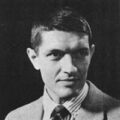
Ni Chih Chin
The “New Emerging Forces” have today lost much of their zip. Thailand and the Philippines have backed out. Indonesia and the United Arab Republic are fence sitting. Others – including Cambodia, this year’s host – are still in, but are clearly uncomfortable with the amount of propaganda, which accompanies the Chinese entourage.
What keeps them in is anger over the “monopolization of sport” by the Olympic committee and its constituent world sports bodies.
There are, to be sure, some GANEFO backers who are frankly carrying the torch for Communist China. But the torch on the GANEFO emblem, and the torch most carry, is Asian nationalism. These nations believe they should have the right to match their athletes against China’s, or anyone else’s, without being blackballed from Olympic competition. One high-ranking Cambodian official told me frankly that there would be serious dissension in the GANEFO ranks were this issue to disappear.
The dispute began a decade ago, when Communist China refused to join the Melbourne Olympics unless it were the sole representative of China. The Olympic committee, following a hallowed tradition (broken, in recent times, only by Adolf Hitler) that sports should rise above politics, invited both Mainland and Nationalist Chinas, and has held both places open ever since.
Communist China, which doesn’t believe politics can be divorced from any field of human endeavor, has insisted on all or nothing.
In 1962, Djakarta was host to the Fifth Annual (mid-Olympiad) Asian Games. Playing the Chinese game, Indonesia refused visas to Formosa (and. -playing the pan-Arab game, to Israel). The games were promptly shorn of their Asian Games label, but since the hour was late, the athletes were told to go ahead and enjoy a friendly, informal competition.
Subsequently, according to Cambodian officials here, the world federations controlling track and field events, swimming, boxing and weight lifting imposed sanctions. Athletes who had been at Djakarta were meted out penalty periods of varying length, during which they could not compete in approved events.
Shortly thereafter, a new sanction was aimed at Cambodia, which was slated to host the sub-regional SEAP (South East – Asian Peninsula) Games of 1963, and was building a new stadium for the event. The Federation of Amateur Athletics (track and field, the backbone of any event) insisted that Cambodia formally condemn the disenfranchised Fifth Asian Games of Djakarta.
Cambodia balked, and the 1963 SEAP Games at Phnom Penh were summarily called off.
A few months later, Indonesia called an organizational meeting for a new, rival sports federation. Cambodia was one of the founding members. (1)In November of the same year, 1963, the first worldwide GANEF0 was held, with about 40 nations participating, and the new federation was formally established.
The new grouping envisioned four continental subgroups to sponsor preparatory meets like the Asian Games. Under China’s leadership, the Asian continental committee is the only one formed so far. It decided in September 1965 to hold the First Asian GANEFO. Cambodia, left standing at the altar with a new stadium by the SEAP Games fiasco, was happy to be host. The games were set for November, 1966.
From across the field, they looked like Americans: often a head taller than their competitors, rangy, smooth-muscled well coordinated. There were 208 Chinese athletes at GANEFO, second in numbers only to their Cambodian hosts, and they dominated the games.
They took home 60 per cent of the gold medals, 30 per cent of the silver and 20 per cent of the bronze.
Their times, distances and records were often not of international caliber. But Chinese weightlifters unofficially broke two world records, and their high jumper came close. There were some very creditable track times, especially for a soggy track. Previous GANEFO records fell almost daily, a measure of the improving quality of Asian sports, both in and out of China.
One had to be familiar with world records, moreover, to know that the events were “second-rate”: most spectators knew only that they were watching a good sports show. Even the occasional overmatching of a small nation by a large one (usually China) was no worse than early postwar U.S. domination of the Olympics, and was handled by the athletes themselves with grace and sportsmanship. The Chinese, in fact, were model sportsmen: applauding their competitors win or lose, apologizing with evident sincerity for minor fouls or collisions, playing clean games throughout.
China put on a good show off the field, too; with a 58-man acrobatic troupe, a 20-man movie team and 29 other newsmen, and dozens of trainers and delegates.
Prince Norodom Sihanouk congratulating Chinese, basketball winners.
The acrobatic troupe put on several shows, and almost every athlete must have been guest at least once at a Chinese-sponsored reception.
I dropped in the afternoon the Chinese played host to the Arab delegates: a soft-drinks-and-snacks affair, at which the athletes mixed awkwardly and exchanged basic pleasantries with limited linguistic success. A few official speeches were made in translation, and a pile of literature – mostly writings of Mao Tse-Tung – was given away.
Mao’s thought, in fact, was omnipresent. High-jumper Ni Chih Chin, interviewed by a French reporter, said in perfect seriousness that “if my jumps were as high as his (Mao’s) thought, you’d need a fireman’s ladder to measure them.” Some Chinese teams were reported to be given a mid-time pep talk from Mao’s writings. The diplomatic community – and, one suspects, some of the visiting athletes -were immensely amused by all this, and the stories traveled and grew fast. A Hong Kong newsman related with delight his interview with a sprinter, who explained how Mao’s theory of contradictions gave him the clue to success: “The 100-meter dash is very short, and one must go very fast.”
The anti-American propaganda, on the other hand, was not so easily laughed off. In a half-dozen spots around the city, huge billboards carried dramatic pictures of Asian peoples breaking their chains, marching in solidarity, driving Uncle Sam out of Vietnam.
In the famous jeux de panneaux the stadium-length pictures and slogans “drawn” by 11,000 students with elaborate colored panels, the anti-war propaganda was heavily interspersed with others more appropriate. Among those I scribbled down: “Down with imperialism and colonialism,” “Repel all aggression!”, “U.S. go home!”, “Vietnam for the Vietnamese,” and “Let us fight against monopolism in sport!”
I asked Prince Sisowath Essaro, a member of the royal families and the Royal Delegate for Sports, whether he had any second thoughts about the propaganda.
He at first defended it on the ground that many of the visitors -needed to understand how the Vietnamese people feel.”
But he quickly moved onto the level of the “monopolism of sport.” Were the Olympic sanctions not an issue, he said, Cambodia might well take a different attitude toward the “politicization of sports.”
Street poster: “Let us combat colonialism, neo-colonialism and imperial
In principle, Cambodia agrees that sports and politics ought to be kept separate. In practice, he seemed to be suggesting, Cambodia doesn’t think it started muddling the two, and wouldn’t mind seeing them separated again.
The First Asian GANEFO might appear proof of neutral Cambodia’s capitulation to the blandishments of her giant Communist neighbor.
Appearances can be deceiving. GANEFO certainly illustrated the extent to which Peking and Phnom Penh find common cause today over U.S. actions in Vietnam, and in fact over the U.S. role in Asia.
But common cause is not capitulation. Before the games were over, Cambodia had occasion to remind the Chinese as she has reminded other “creditor” nations in the past of her prickly independence. If her independence was compromised by GANEF0, there are some indications Cambodia learned some lessons by it.
And if the Chinese made a lot of points among the thousand or more Asian athletes who came to the games, the Cambodians made some points of their own.
First, the physical facilities were stunning. The $12 ½ million Complexe Sportif National (built entirely with Cambodian funds, at one time with the Olympic-related SEAP Games in mind) is probably one of the most handsome and well designed in the world.
The visitors also were impressed by two new technical colleges nearby, where some of them were housed. To these was added the Cite’ Sportive, a $2 million dormitory city built with Chinese money. (China also put up another $2 ½ million for other associated costs of the games, as well as sending along most of the sports equipment and three shiploads of food. Prince Essaro estimated that Chinese contributions covered about half the costs of the games, including hospitality from all participants. North Korea contributed $100,000, and a few other countries made token gifts.)
Secondly, the games themselves were well organized and smooth running, a true credit to Cambodian administration.
And the opening and closing ceremonies were in a class by themselves. American readers got some inkling of the jeux de panneaux from reports of Gen. Charles deGaulle’s visit last September. (DeGaulle in fact got an incomplete dress rehearsal of the show being drilled for GANEFO.)
Complexe Sportif National (Photo Ministry of Information)
But words cannot describe the impact of a grandstand filled with students top to bottom, the length of a football field, “painting” huge, intricate murals which change every minute or two, while 14,000 athletes, schoolchildren, soldiers and college students carry out formation ensembles on the field. Despite the propaganda, it was stunning.
The host country, moreover – even making allowance for its large team of athletes – put on a remarkably good showing on the field: third both in gold medals won and in all medals combined.
None of this was lost on the guests. Nor could they miss Cambodia’s impressive internal development, and the serene, prosperous air of Phnom Penh.
Cambodians like to call their country “an oasis of peace in Southeast Asia,” and GANEFO gave them a chance to substantiate the claim. Cambodia is the only non-Communist country to reject all U.S. aid. While giving unblushing moral support to the cause of Hanoi and the National liberation Front, it has maintained a strict neutrality, which has unquestionably left it free to surge ahead Of some of its pro-American neighbors in its internal development and stability.
These, from the Cambodian point of view, were among the advantages of being host to GANEFO. There were disadvantages.
Cambodia discovered, early in the games, that its resident Chinese minority was a noisy, and unsportsman-like, claque for the Chinese athletes, and as such an embarrassment to the host country. Editorials pleading for more courtesy were of limited success,
There was also mild annoyance at the way China stole the show. Chief of State Sihanouk, in an article written after the games, lamented the “chauvinism of small nations” whose press gave all their attention to China and North Korea, and ignored the tiny little host country, which so often beat everyone else in sight.
More serious was the discovery of “ideological solidarity.’ also a failing which Norodom Sihanouk bluntly pointed out in post-GANEFO editorializing. Speaking of the Communist-nation arbiter in a deciding match between North Vietnam and Cambodia to decide the bronze medal in volley ball, he asserted: “It was extremely painful to witness, for more than an hour… refereeing which revealed itself as a monument of Partiality with a capital P!”
Both Sihanouk and visiting journalists were shocked by Korean behavior in their final match against Vietnam, played before the closing-ceremony capacity crowd.
Cambodian athletes: a creditable showing.
Korea, long apparent as the gold medallist, had beaten Cambodia by three points. With Vietnam and Cambodia tied for third place, the bronze medal would be decided by whether or not the Koreans won by more than three points. A half-hour before the end of the game, Korea led 3-0; but it blatantly loafed through the end of the game, let the Vietnamese have a point, and ended with a 3-1 score which threw the medal to Vietnam.
It revealed, Sihanouk commented, “more ideological solidarity than pure sportiveness.”
Most revealing, though, were two incidents which put “politics and sports” in bold (though behind-the-scenes) perspective.
One involved the Israeli ambassador, whose country had been snubbed by the GANEFO committee when teams were invited. The ambassador himself was snubbed when invitations were sent out to the colorful opening ceremonies.
Just a few days beforehand, someone – reports say it was Sihanouk himself – learned of the snub. Invitations of participant teams, Cambodia decided were in the hands of the Chinese-dominated committee, but Cambodia herself would decide whom to invite to her special events as spectators. The ambassador received a personal phone call to sound out if he would like to attend, and then a personal follow-up from the protocol office to be sure he felt welcome. By the time invitations were sent out for the formal closing ceremonies, he received a proper printed invitation along with everyone else.
The second incident had no happy ending, and probably indicates how limited Cambodia felt herself in putting her foot down. As the games drew to a close, a North Korean boxer tried to defect.
A recent repatriate from Japan, he had left his wife and family there, and it was at the Japanese Embassy that he first pleaded his case. The Japanese turned him down; he was picked up by Cambodian security police, and was shortly thereafter sent back to Korea. Sihanouk felt constrained to wire the man’s family his personal regrets that Cambodia had been unable to offer asylum. He also reported that North Korea had promised the Cambodian government to take no reprisals against the man.
Although known in diplomatic circles, the incident was not spoken of publicly by Cambodians until the Prince’s telegram was published, and the subject was then again quickly dropped. Most Cambodians probably still do not know that it was this, which triggered the South Korean decision to withdraw its consulate and break relations.
One would conclude Cambodia was not proud of the extent to which she felt her hands tied by “GANEFO solidarity.”
The First Asian GANEFO was obviously planned as a direct competitor to the (re-) Fifth Asian Games in Bangkok, which opened, three days after GANEFO ended, a scant 350 miles away.
The Olympic committees’ policies of sanction, on the other hand, are just as obviously designed to crush GANEFO.
Who is winning?
Probably the Olympics, although the ledger is not all one-sided.
The GANEFO games at Phnom Penh were loaded with enticements, particularly for the Arab countries who had farthest to come: everything was free, including transportation. (The Cambodian Royal Delegate for sports expressed surprise at this, and said if such an arrangement existed, it must have been Chinese; Cambodia, he said, offered only hospitality in Phnom Penh during the games.
There was another Arab lure: Israel, clearly an Asian continental country, was not invited. Instead, a team was sent from “Palestine,” meaning theoretically the refugee communities in Syria, Lebanon and the Gaza Strip, but in fact meaning long-time refugee students in Egyptian (African continent) schools.
All this paid off: Iraq, Lebanon, Syria and Yemen sent teams – albeit small ones – only to Phnom Penh.
Six nations sent teams to both. Singapore and Japan were probably at Phnom Penh only as a courtesy to Cambodia, and Japan’s was a rump team organized privately (with official blessing), without her best athletes. Indonesia, Pakistan and Ceylon were, despite their reservations, committed to GANEFO. (And Indonesia almost backed out altogether: only the appearance of a rump Communist team at last fall’s games in Havana, Cuba, it was reported, persuaded the new Indonesian leaders it would be wise to be at Phnom Penh officially.) Nepal probably came to Phnom Penh to avoid offending her Chinese neighbors.
The others at Phnom Penh were predictable: Mainland China, North Korea, North Vietnam, Mongolia, Laos (a Pathet Lao token team; the Royal Government of Laos pleaded lack of time to prepare a delegation) and, of course, Cambodia.
(Cambodia, which has through all this maintained her membership in the Olympic federations, considered sending a team to Bangkok, too. But most of her athletes, fresh from a GANEFO competition, would presumably have been banned, so she put all her efforts into her own games.)
To avoid embarrassment, the GANEFO committee quietly sounded out some nations – Burma, Iran, and Jordan – and did not invite them when they said they wouldn’t come anyway. Others were not invited: India, which has been hostile to GANEFO ever since Pakistan helped found it; and Israel, Formosa, Hong Kong, Malaysia, Thailand, South Vietnam and the Philippines.
All these latter, of course, were at Bangkok. So were the six double-entry countries, usually with their better teams at Bangkok, although some – Singapore and Ceylon – apparently sent some top athletes to Phnom Penh for events where the competition would be better, such as table tennis.
Only one country has so far carried the argument with the Olympic federations to the breaking point: Ceylon’s weight lifters have withdrawn from the world federation.
The Fifth Asian Games at Bangkok, it should be added, lost some points on behavior. Whereas the Cambodian press dutifully reported daily results of the Bangkok Games, Asian athletes who arrived early in Bangkok were unable to read the slightest mention of the games then underway at Phnom Penh. The Bangkok Games themselves, moreover, were marred by several unfortunate incidents of bad sportsmanship, including a fist-swinging melee during a basketball game; several Japanese columnists have since commented on the marked contrast with the serenity of the Phnom Penh Games.
But on balance, Bangkok clearly came out ahead. GANEFO is not yet broken; indeed, if China settles its internal problems enough to carry out the next worldwide GANEFO scheduled this fall in Peking; many nations may well be lured out of simple curiosity.
Nevertheless, it is clear that Peking’s aim of creating an effective rival organization to the Olympics is lost.
The question, which presents itself, is this: has the time come for the Olympic organizations to drop their ban?
Ever since China began the “politicization of sport, the major Olympic federations have responded in kind. A more far-sighted policy might be to let the GANEFO nations go ahead with their games. It would be legitimate to insist that world records be recognized only when set in games approved by world federations. But GANEFO participants would be free to come and try for records, and medals, anytime they chose.
Such a policy would eliminate a major complaint of Asian nationalists, who feel the Olympic federations are using their (Western) power to crush one aspect of Asian nationalism.
“The International Olympic Committee,” wrote Cambodian Chief of State Norodom Sihanouk after the Phnom Penh Games, “arrogates to itself rights which the member states of the United Nations itself have not dared to.
“In the political domain, there are international colloquies, meetings and conferences which are held without being sponsored or approved by the U.N. Yet the latter has never permitted itself to disqualify the nationals of its member countries, who have participated in these meetings, and to keep them out of the U.N. or its annex organizations.
“When our GANEFO proclaims that we must break the monopoly of sport, it is not making politics, but fighting against the dictatorship and political totalitarianism of the Olympic Committee….
“What we want is that any athlete have the right to participate in any competition, organized by any federation.”
- Others: China, USSR, Indonesia, UAR, North Vietnam, Ceylon, Mali, Guinea. Pakistan, Cuba and Yugoslavia, according to Cambodian recollections.