Category: Culture

.
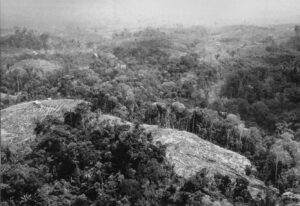
An aerial view of part of Peru's Upper Huallaga Valley shows ravaged patches of jungle which have been cleared by peasants for the illegal cultivation of coca bushes. Use of the pesticide Spike over the area, which is at the experimental stage, could further damage the ecosystem, according to environmental advocates. Photo by AP/Wide World Photos.

The Lure of a Criminal Cash Crop

TINGO MARIA, Peru. – On her farm in a hollow in Peru’s high jungle, one woman’s pride are her tropical fruit trees. But she acknowledges that fruit doesn’t bring in money in. Nor does the coffee and cacao she and her husband grow. These days,

Post Featured Image APF Icon

Is the Government Losing its Memory?

Note: This article contained pictures that were copyrighted and could not be published on this Web page. Captions for those pictures appear in italics. Scholars of antiquity and the Middle Ages often complain of insufficient information with which to piece together the historical record. Chroniclers

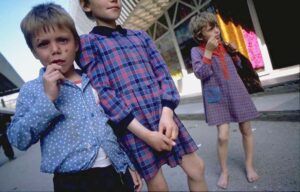
These orphaned Russian siblings comb the streets and bazaars in Dushanbe, in Tajikistan, in search of food and small change. Shoeless and infested with scabies, these children are among the thousands of orphaned children of Tajikistan, the miserable spoils of the civil war.

Report From Tajikistan

Story by Andrew Meier with photos by Mia Foster TAJIKISTAN – It had been a lovely afternoon drive through the mountain passes of this small Central Asian state. As we made our way along the craggy reaches of northeastern Tajikistan, the greatest threat had been

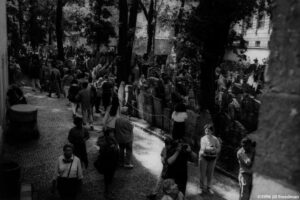
Prague's old Jewish cemetery, contains 100,000 bodies, buried on top of the other, 12 layers deep. The oldest grave is that of poet Avrigdor Kara. His eyewitness elegy to the 1389 pogram, where 3,000 Jews were killed, still is recited every year in the Yom Kippur Day of Atonement services. The cemetery is now a tourist attraction, part of the "Jewish Prague" tour.

Traces of the Past

Text and photos by Jill Freedman APF fellow Jill Freedman traveled to eastern Europe to document the remnants of Jewish life in Hungary, Poland and Czechoslovakia. These residents of the Jewish home for the aged in Szeged, Hungary listen during a concert of the Israeli

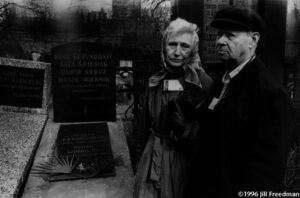
Rose and Isak Arbuz, from New York, stand in front of the Warsaw grave commemorating his brother, his brother's girlfriend and another couple who were part of the Warsaw ghetto uprising in 1943. Their skeletons were recovered from a basement and were buried together. The Jews fought from April 19 to May 16, longer than France and Poland fought against the Germans. There were only 220 insurgents against 2,090 Germans, Ukranians and Latvians. "All it was about, finally, was that we not just let them slaughter us when our turn came," wrote Marek Edelman, the last surviving leader of the uprising. "It was only a choice as to the manner of dying."

Survivors

Text and photos by Jill Freedman In the Lublin region of Poland, on November 2, 1943, an operation, given the code name “Harvest Festival” by the Germans, was begun. Its object was the murder of those survivors of the Warsaw ghetto uprising who had been