The Alicia Patterson Foundation has merged into the Fund for Investigative Journalism.

This site is now an archive. For active programs, grants, and fellowships, visit fij.org.

Search Results for: user – Page 4

.
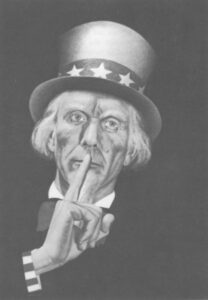
Sketch for World War II poster. (General Services Administration).

The Age Of Electronic Government

It began as a routine Freedom of Information Act request but ended in a tangle, a computerized Catch-22. In 1985, the non-profit organization, Public Citizen, requested that Occupational Safety and Health Administration (OSHA) provide an array of records detailing workplace hazards. The Washington-based public interest
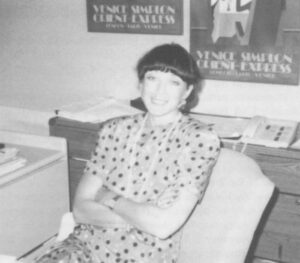
Michele Corash, a San Francisco lawyer advising industry on Prop 65.

Proposition 65: California’s Controversial Gift

DAVIS, CA.-It is theatre in the round at the barn-like Wyatt Pavilion on the University of California campus here. But the people on the raised stage are not actors and the audience is obviously not a student crowd. Instead, a phalanx of briefcase-bearing representatives of

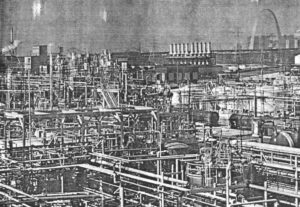
Monsanto Chemical Company’s W.G. Krummrich plant in Sauget, Il., across the Mississippi River from St. Louis. Photo: Courtesy of Monsato

Your Right To Know What You Breathe And Drink–A New Law Emerges

Editors Note: APF Reporter Vol.11 #3 exsisted only as a photo copy, becuase of this the pictures in this story are of poor quality. Monsanto Company’s three St. Louis area plants use perchloroethylene to make a bacteria-fighting chemical in deodorant soap, produce paradichlorobenzene to make

Former President Jimmy Carter (Photo by Karl Schumacher–The White House)

Living Can Be Hazardous To Your Health

ATLANTA–Jimmy and Rosalynn Carter may be getting older but a computer recently told them they are far younger than their actual ages. They are among the first to undergo a new computerized health risk appraisal developed here at the Carter Center of Emory University in

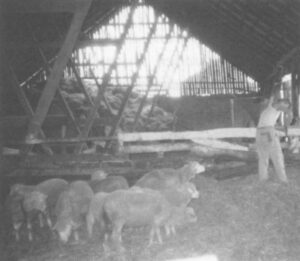
Tending the Sheep at Gloskow.

The Crisis of Polish Drug Abuse

GLOSKOW, Poland–At the end of a dusty road just beyond this tired northern town sits a rambling white stucco house with faint architectural pretensions to grandeur. Like most things in Poland, the house and its surrounding five acres of farmland have seen better days: the

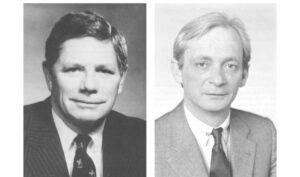
Personality strengths and weaknesses greatly influence decision making in the American pulp and paper/forest products industry. Two key decision-makers are Charles W. Schmidt (L.), senior vice president, Raytheon Corp; and Taggart Edwards (R.), executive vice president, Champion International Corp.

Calling the Shots

Balancing potential human health hazards versus herbicide spraying, bartering long-term forest improvement for needed short-term profits, gambling on untested energy systems–all are complex decisions that reflect the philosophies and styles of the forest industry executives who make them. In 1979, St. Regis Paper Company banned

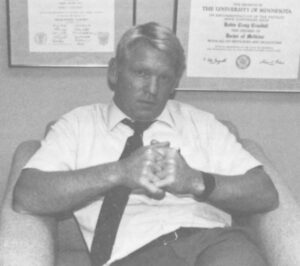
Dr. Timothy Mjos, a Minnesota orthopedist.

Measuring Medicine

Several days a week, Dr. Harold Jensen pores through a stack of medical records from Ingalls Memorial Hospital, a 704-bed facility in a working-class Chicago suburb. Review nurses have used guidelines to winnow the patient charts down to those which may present problems. However, as

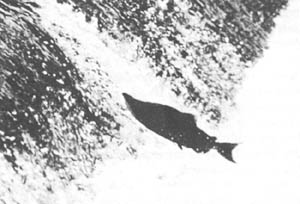
Four years after his life cycle began in this stream, a sockeye salmon returns to start the cycle anew.

Homeward Hearts: A Story of Pacific Salmon

The cool evening breezes have not yet evaporated the remainder of the sweat between the spectators’ shoulder blades. Shielding their eyes from the sun, they stare transfixed at the rushing water before them. “Yea! Looky there.” Twenty-one heads swivel in time to catch a shadow

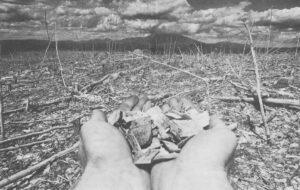
A true clearcut.

Maine’s Faustian Dilemma

Yale University’s David M. Smith, the country’s preeminent silviculturist, once believed it was impossible to clearcut the Maine forest so totally that it wouldn’t immediately renew itself naturally. “I was wrong,” he now says with dismay. “I underestimated the impact that heavy-handed clearcutting with ponderous

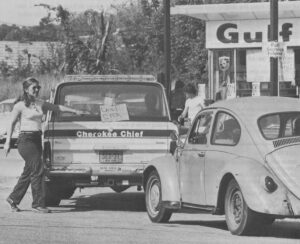
Cars in line for gas

Cutting Back

WASHINGTON, DC–While motorists waited in lines during the 1979 oil crisis, Mobil and Gulf made sharp cuts in gasoline allocations that were not consistent with their ample stocks of gasoline and crude oil, an unpublished government study shows. Department of Energy officials used a computer